Coro is a modular cybersecurity platform for small and mid-sized businesses and the lean IT teams that run them. Customers get endpoint protection through a single agent. I was Director of Product & Corporate Marketing.
What happened
On 19 July 2024, a faulty CrowdStrike Falcon Sensor update caused widespread Windows failures. After the outage, buyers and administrators immediately asked about software update safety. Endpoint agents run across a company's machines, and lean IT teams have little spare capacity for a failed update.
The response
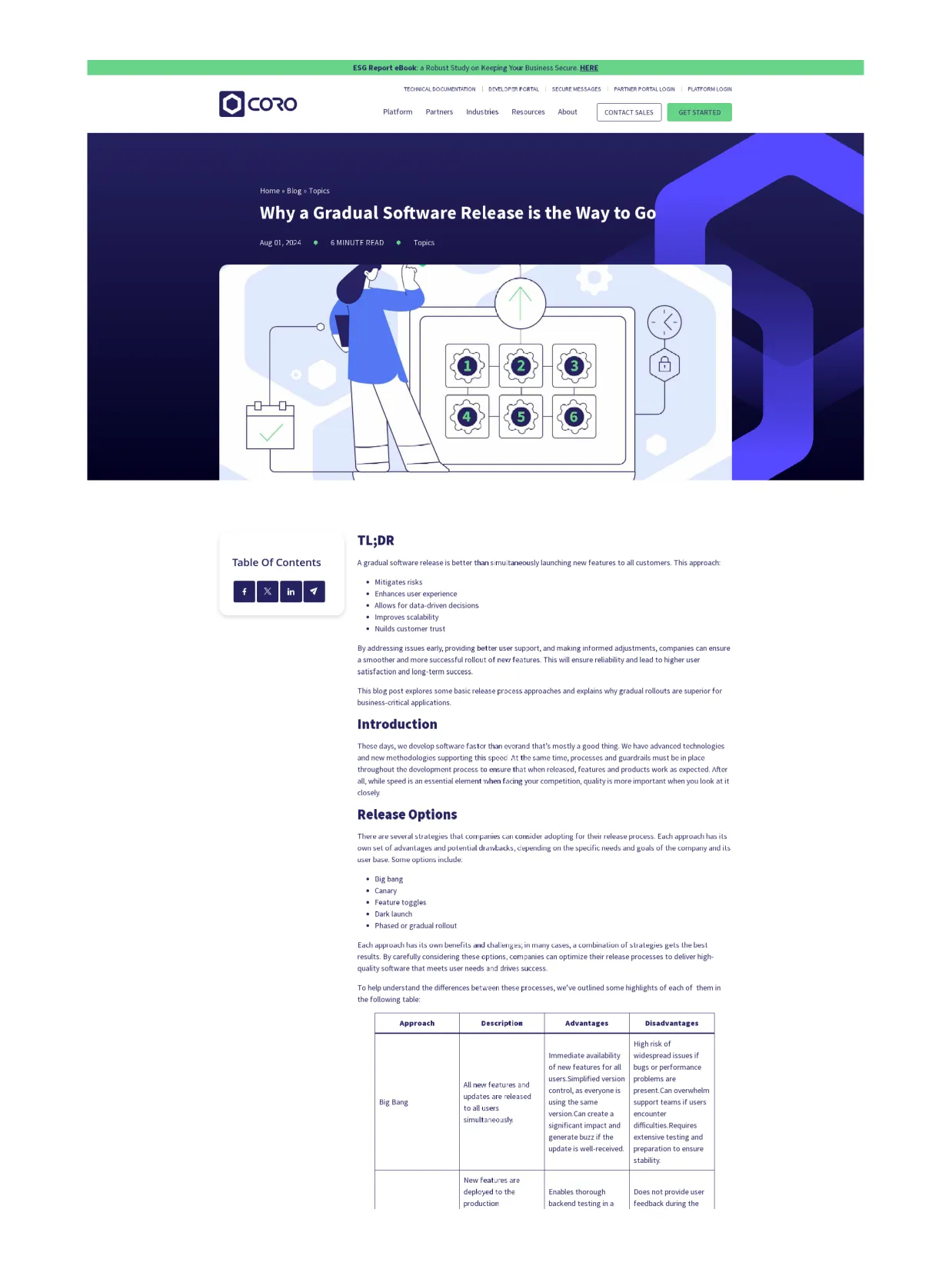
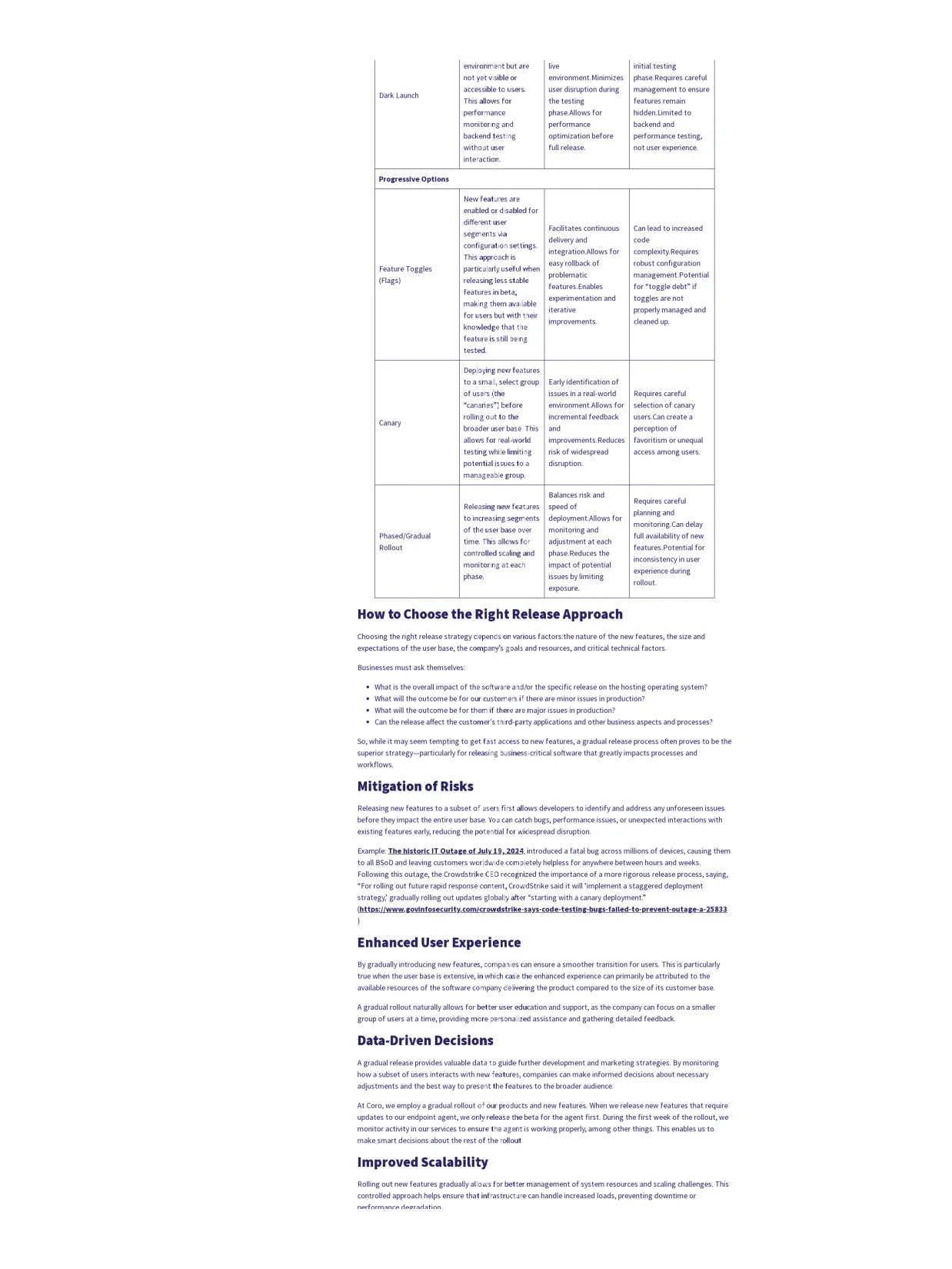
I planned a short series for different readers. In the first post, I explained Coro's quality assurance and beta process, feature flags, rolling deployment, and the control administrators keep over agent updates. For the next post, I explained Big Bang, canary releases, feature toggles, dark launches, phased rollouts, and Coro's own phased rollout process.
My team then covered the effects on travel, education, healthcare, and banking while keeping Coro out of that article, published a recovery guide for administrators working with Windows PE, Safe Mode, Hyper-V, and BitLocker, and wrote a broader piece on operational disruption using schools as the example. I wrote the first two pieces and commissioned, edited, and approved the rest.
Why I split it by reader
At Lytx, I had already run customer-facing crisis communications during a mass data-loss event. Buyers, administrators, and broader audiences had different questions, so I planned the response by reader and the information each group needed.