Coro is a modular cybersecurity platform for small and mid-sized businesses. I was Director of Product & Corporate Marketing.
The gap
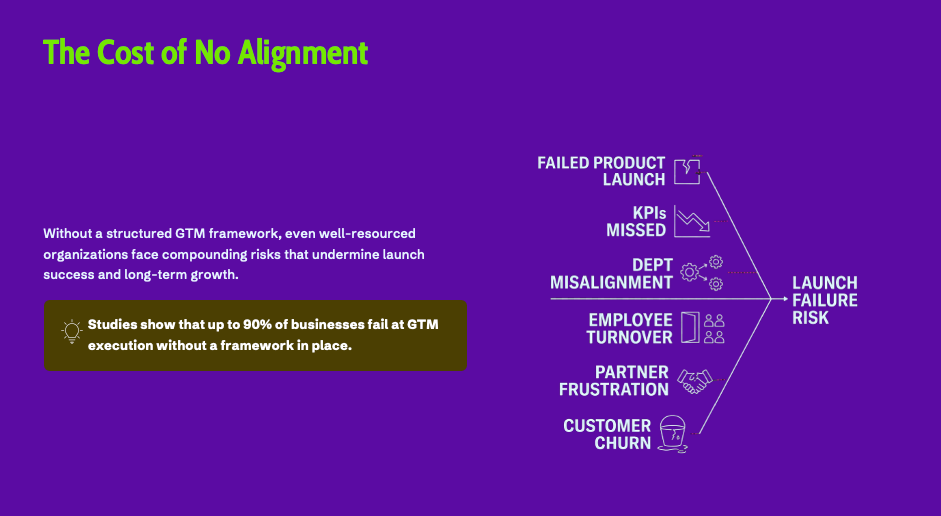
We had used the same release process for every product launch since April 2023, including version 3.0; launch information was stored in one hub, and outbound teams heard about launches before customers did. Price changes, deprecations, changes in market strategy, and emergency responses still lacked a defined process.
The framework
I started by aligning terminology because engineering and marketing used the word release differently, then organized the work around market understanding, messaging and positioning, and execution and measurement. Each area included the questions we had to answer before shipping.
I also defined ownership and coordination. Every release had a Release Driver to trigger the process and a Release Owner to run the plan. At each kickoff, a cross-functional task force joined the process. The timeline was discovery, kickoff, orchestration, launch approval, launch, internal communications, and post-launch tracking.
What I changed
I mapped the existing process before recommending changes. While mapping it, I found the working steps and the gaps: missing roles at kickoff, timelines that gave partners too little time, and launch approval owned by one person when several functions needed a say.
My recommendations were clear ownership, a cross-functional task force, a standard timeline, and one shared hub with reusable templates for the go-to-market plan, responsibility matrix, internal announcements, and customer communications.
How I scale it
I use the same go-to-market process at different levels of depth. In Coro's tiering, a tier-one release used the full process. A tier-four release used release notes and an in-app notification.